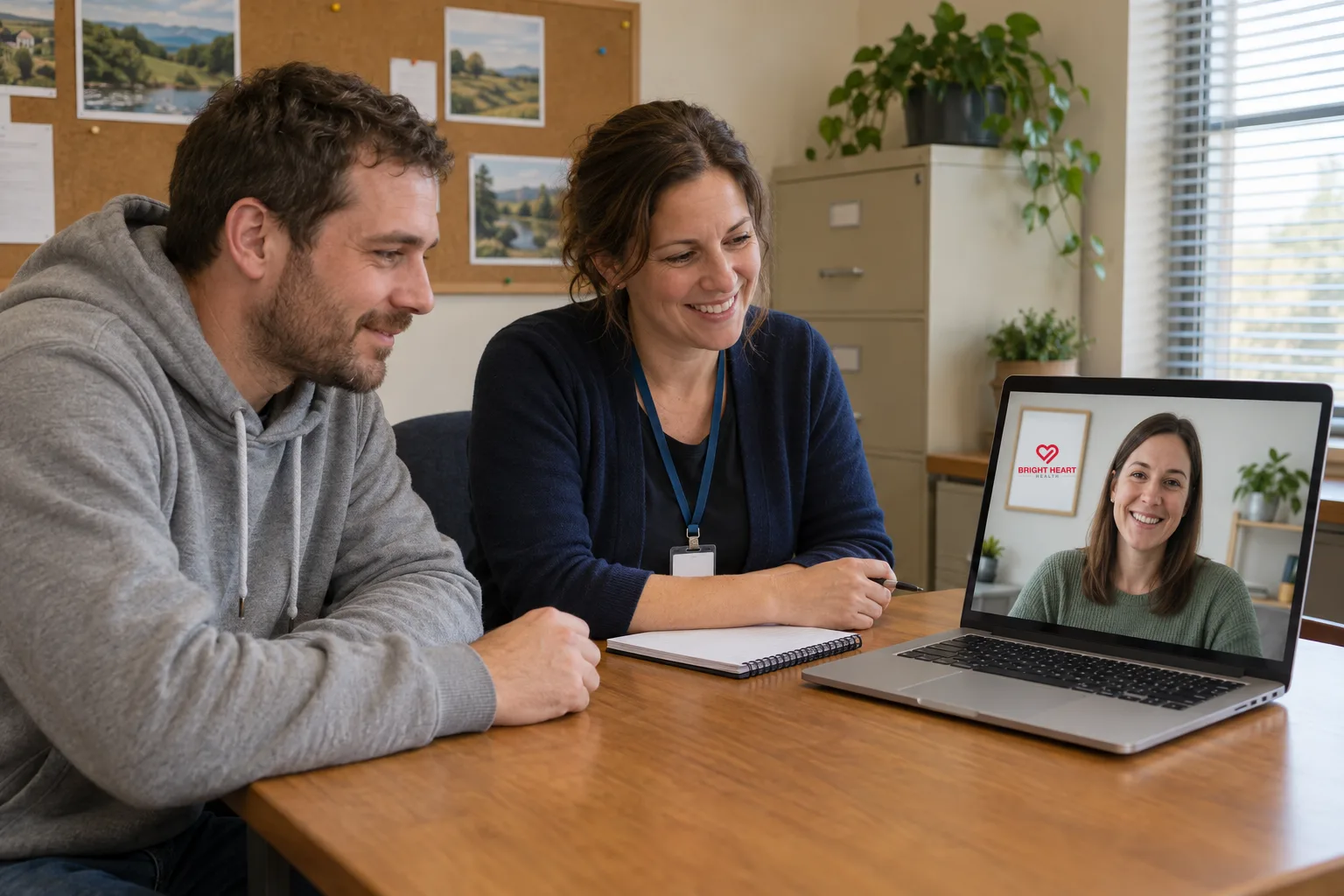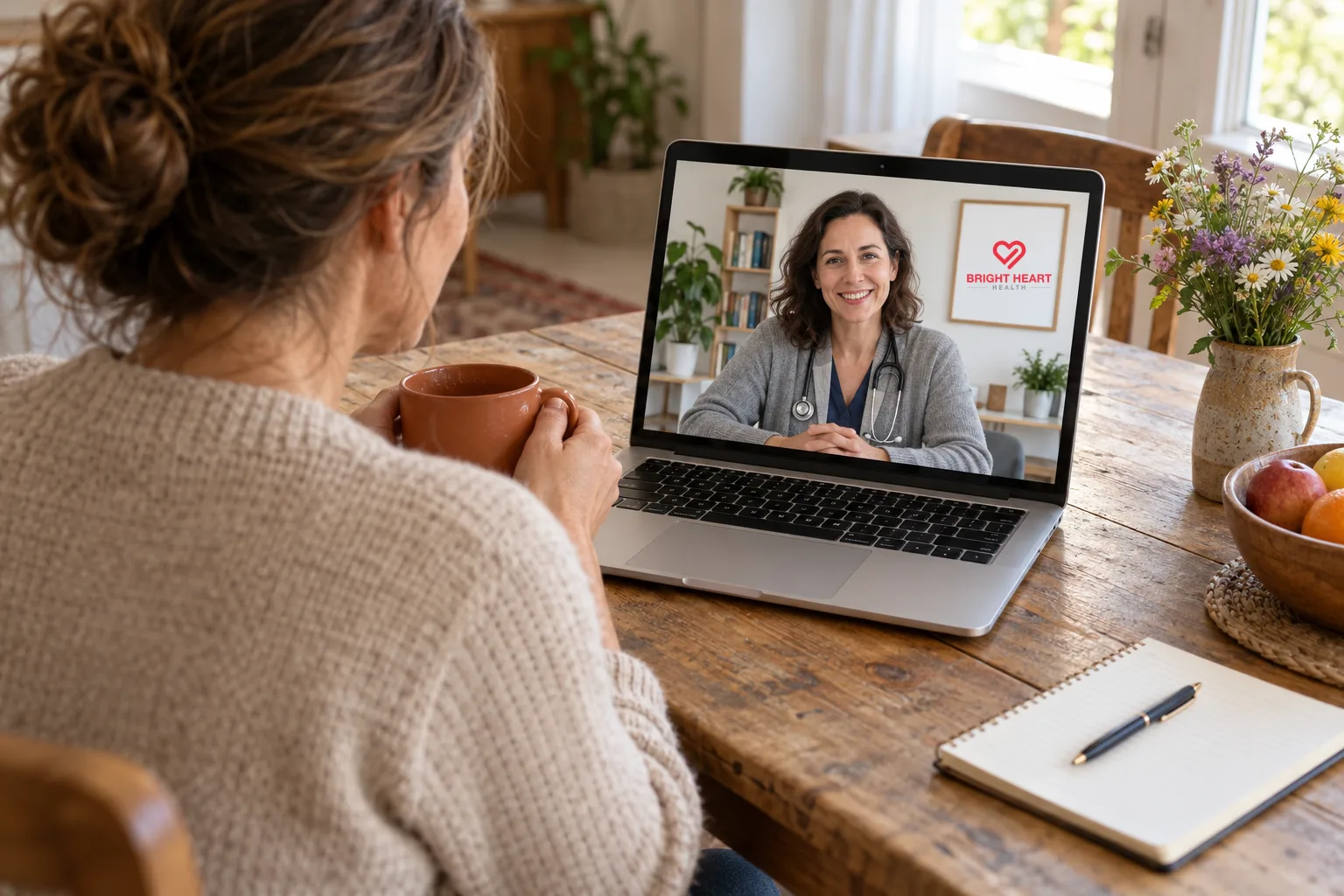
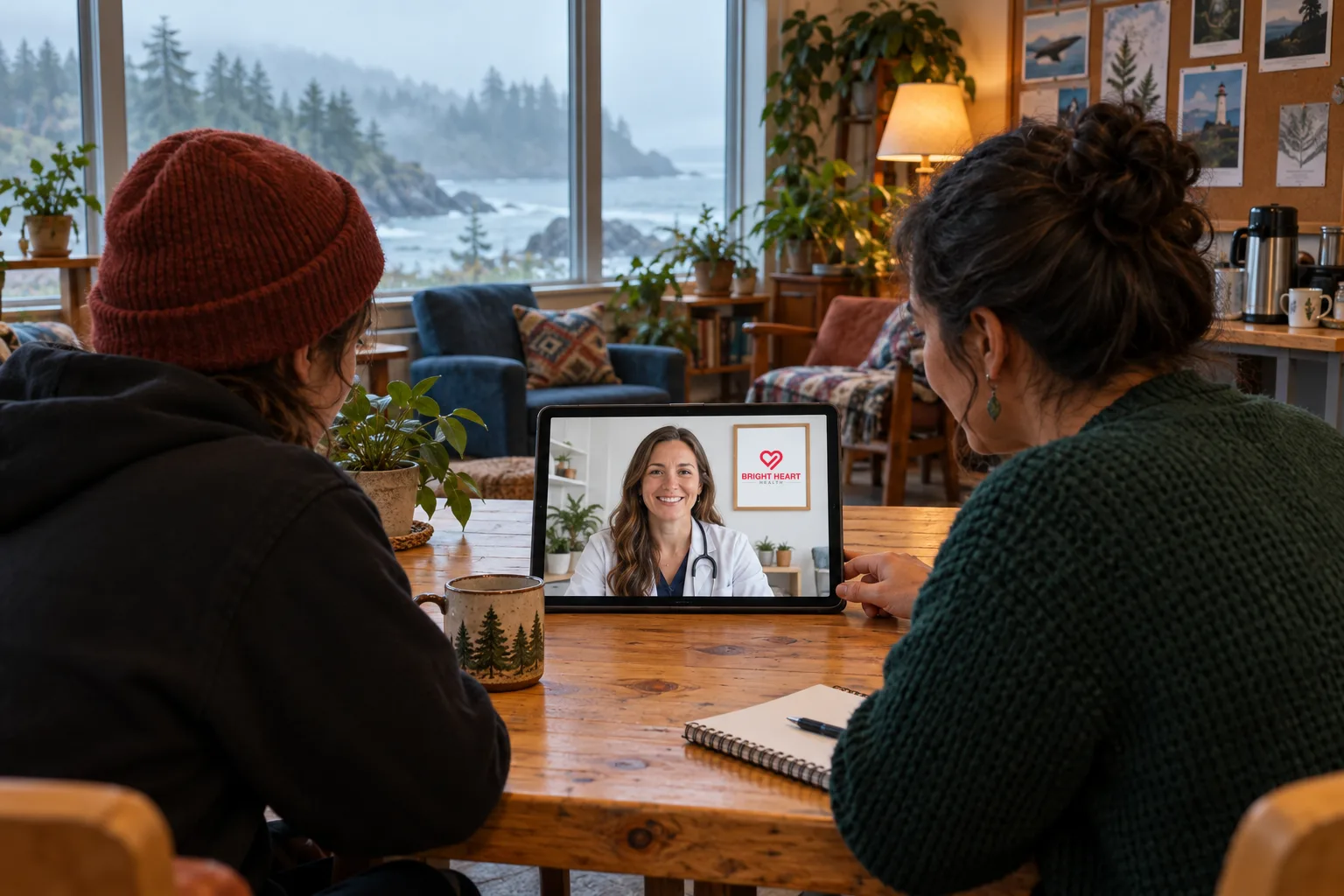
Starting treatment for opioid use can depend on small things. Is there a ride? A working phone? A provider who can see you today instead of next month? In Humboldt County, California, the Humboldt Area Center for Harm Reduction (HACHR) and Bright Heart Health have worked together to make that first step easier.
That work is now featured in a statewide video series about medications for addiction treatment. Here is what the series is, what the HACHR segment shows, and why we think this model matters.
About the MAT video series
In 2025, Facente Consulting worked with Daigle Digital to create a video series featuring 10 case studies of programs across California that offer medications for addiction treatment, often called MAT. The series was commissioned by The Center at Sierra Health Foundation, with funding from the California Department of Health Care Services.
Each video runs about three to five minutes. Together they show different models and best practices for MAT services for people who use opioids, in many kinds of settings around the state.
One segment is titled "Low-barrier, telehealth-based MAT to meet people where they are: The Humboldt Area Center for Harm Reduction."
What the HACHR segment shows
According to the series description, HACHR provides harm reduction services in Eureka, California, including linkage to MAT through telehealth in partnership with Bright Heart Health. The description continues:
"Their low-barrier mobile model includes minimal requirements and avoids the stigma associated with traditional brick and mortar health care settings."
Facente Consulting, MAT Video Series
In our internal newsletter, we described the video as showing how HACHR brings harm reduction principles together with linkage to medications for substance use disorders. To us, it captures a model of dignity-centered care. It expands access, reduces stigma and keeps the focus on each person's needs.
What "low-barrier" means in practice
Low-barrier care means removing the hurdles that keep people from starting or staying in treatment. Traditional programs can require long waitlists, several appointments before medication begins, lab work, extensive paperwork or strict rules about who qualifies. For someone without stable housing, reliable transportation or a phone, every extra step is another place where care can fall apart.
Through the HACHR partnership, people can often have a telehealth appointment with an addiction medicine provider on the same day they ask for help. They can talk with a provider, get an evaluation and begin medication quickly.
Tiffany Laffoon, Medication-Assisted Treatment Program Coordinator at HACHR, explained why that timing matters in our case study on the partnership:
"Once someone has the courage to ask for help, it needs to happen quickly. If it doesn't, they may lose that motivation, relapse, or fall back into old habits."
Tiffany Laffoon, HACHR
Why harm reduction and telehealth fit together
HACHR is a community-based harm reduction organization that serves people who use drugs without judgment. It offers safer-use supplies, overdose prevention resources, peer support and connections to treatment. Over time, that steady and respectful presence builds trust, especially with people who have felt shut out of traditional health care.
Telehealth adds something that is hard to find locally: fast access to a prescriber. Tiffany notes that Humboldt County has seen substantial reductions in primary care providers and specialists over the past two decades. Long waits, travel, unreliable phones and unstable housing can all make it hard to keep a clinic appointment.
A secure video visit, started from a place people already know and trust, can close some of that distance. As Tiffany put it, "We meet people where they're at."
Dignity at the center of care
"Meet people where they are" can sound like a slogan. In practice, it looks like a few simple commitments:
- Start when the person is ready. Not after months of steps and paperwork.
- Keep the door open. Our case study notes that many people who step away from care for a while come back when they are ready, knowing they will be welcomed without judgment.
- Stay in regular contact. Most prescriptions in the HACHR program have been for a 7-day supply. That rhythm creates frequent chances to check in, while staying flexible for people whose housing or transportation is uncertain.
- Remember that medication is one part of recovery. Relationships and community matter too.
Tiffany has said that the community built around the program may be its most therapeutic part. In her words, "The medication is important, but the relationships and support are what help people stay engaged."
What other communities can take from this
The video series was made so programs across California can learn from one another. Asked what advice she would give other organizations considering a similar partnership, Tiffany kept it short: "Just do it."
She believes that more low-barrier telehealth through trusted community organizations could reach more people in rural and underserved parts of the state, where access to addiction treatment is still limited.
We are grateful to HACHR for its partnership and to the teams behind the series for sharing this model of care. To learn more about the partnership, including how prescription activity and patient reach have changed over the years, read our full case study, Breaking Down Barriers to Recovery Through Low-Barrier Telehealth Care.
Looking for care?
Bright Heart Health provides outpatient treatment for opioid use disorder and substance use disorder, along with mental health and psychiatric services, by secure video in California, New Mexico and North Carolina. We accept Medicare, Medicaid, commercial insurance and self-pay. If you or someone you care about is ready to talk, reach out to our team.
This article is for general information and isn't a substitute for advice from your own clinician.